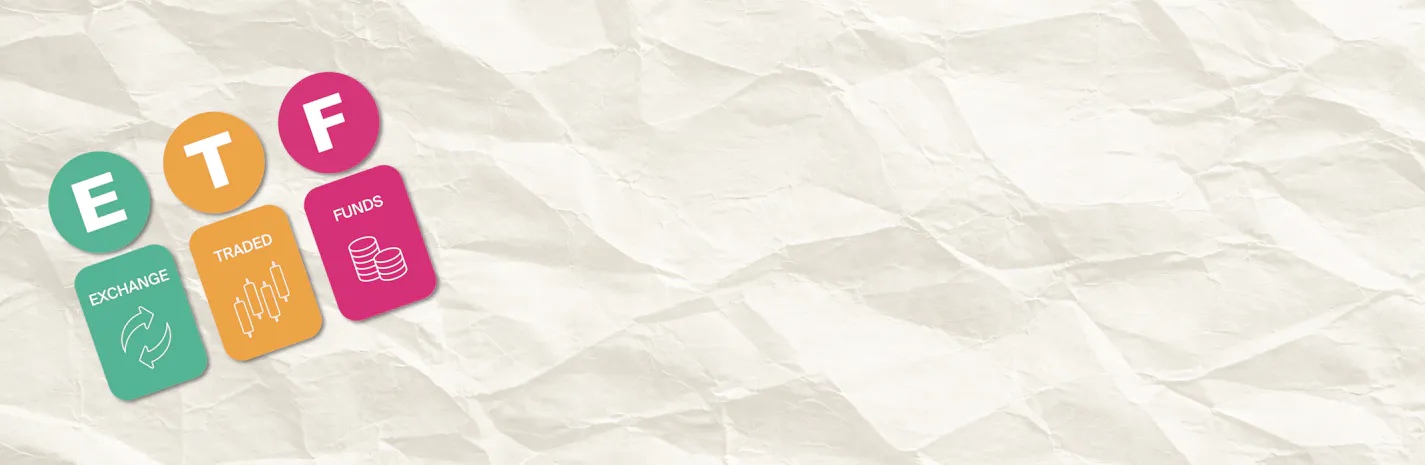
What is an index ETF Actually?
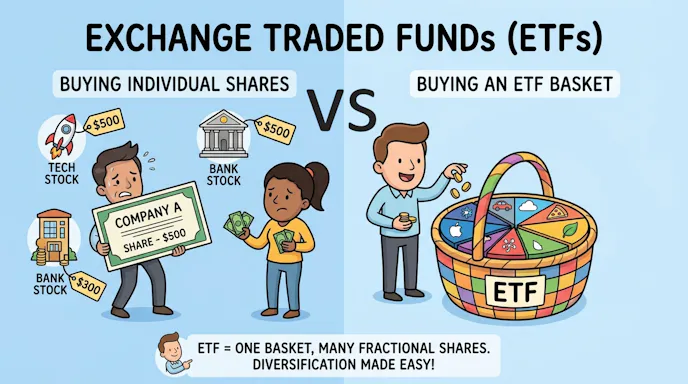
An ETF is a basket of investments you can buy with a single purchase.
ETF stands for Exchange Traded Fund. Ignore the name. What matters is what it does.
When you buy a single company’s stock — say Apple — you own a tiny piece of Apple. If Apple has a bad year, your investment has a bad year. Your money is tied to one company’s fate.
An index ETF works differently. Instead of one company, you own a small slice of hundreds of them at once. A single ETF tracking the S&P 500 gives you exposure to 500 of the largest companies in the US — Apple, Microsoft, Amazon, Google, and 496 others — all in one purchase.
One buy. 500 companies. Instant spread. Diversified.
The first time someone explained ETFs to me I asked which stocks I needed to pick inside it. They looked at me like I’d missed the whole point. You don’t pick anything. That was the part that changed how I thought about investing.
If one company crashes, it barely moves the needle because it’s just one of 500. The rest carry on. This is why index ETFs are considered one of the safest and most reliable ways to invest long term.
You don’t need to research companies. You don’t need to pick winners. You don’t need to know anything about accounting or quarterly earnings reports.
You just buy the basket and let the market do its thing.
Why Index Beats Active Almost Every Time and Why It’s Perfect for First Time Buyers
There is another type of fund called an actively managed fund.
These are run by professional fund managers — people whose entire job is to study the market, pick the best stocks, and beat the average return. They have research teams, data tools, and decades of experience.
And most of them still lose to a basic index fund.
Over any 15 year period, roughly 90% of actively managed funds underperform the S&P 500 index. Not some of the time. Most of the time. The data on this is consistent and has been for decades.
See also: What is a real return?
Why? Two reasons.
First, it is genuinely hard to beat the market consistently. Even the best managers have bad years. Over time, the average wins.
Second, fees. Actively managed funds charge higher fees because you’re paying for the manager’s expertise. A typical active fund might charge 1% a year. An index ETF charges as little as 0.03%. That gap sounds small. Over 30 years it is worth tens of thousands of dollars. Compound interest compund on fees too.
For first time investors this makes index ETFs the obvious starting point. You don’t need to understand the market. You don’t need to monitor your investment constantly. You don’t need to make decisions about which stocks to hold or sell.
You buy it, you hold it, you let compound growth do the work.
That simplicity is not a compromise. It is the strategy.
How to Buy Your First One
You need three things:
- A brokerage account
- A bank account to fund it
- A decision about which ETF to buy
The two most recommended ETFs for beginners are VTI and VOO.
VTI tracks the entire US stock market — over 3,500 companies. VOO tracks the S&P 500 — the 500 largest US companies. Both are low cost, widely held, and run by Vanguard, one of the most trusted names in investing.
Either one works. Most experts won’t argue over which is better. Just pick one.
To open a brokerage account, go to Fidelity, Vanguard, or Schwab. All three are free to open, have no account minimums, and let you buy ETFs commission free. The setup takes about ten minutes and requires your Social Security number and bank details.
Once your account is funded:
- Search for VTI or VOO in the search bar
- Enter the dollar amount you want to invest
- Place the order
That’s it. You are now an investor.
You don’t need to watch it daily. You don’t need to react to news. Set up an automatic monthly contribution if you can and leave it alone. Time does the rest.
See also: What Is a Roth IRA & Should I pay off debt before investing?