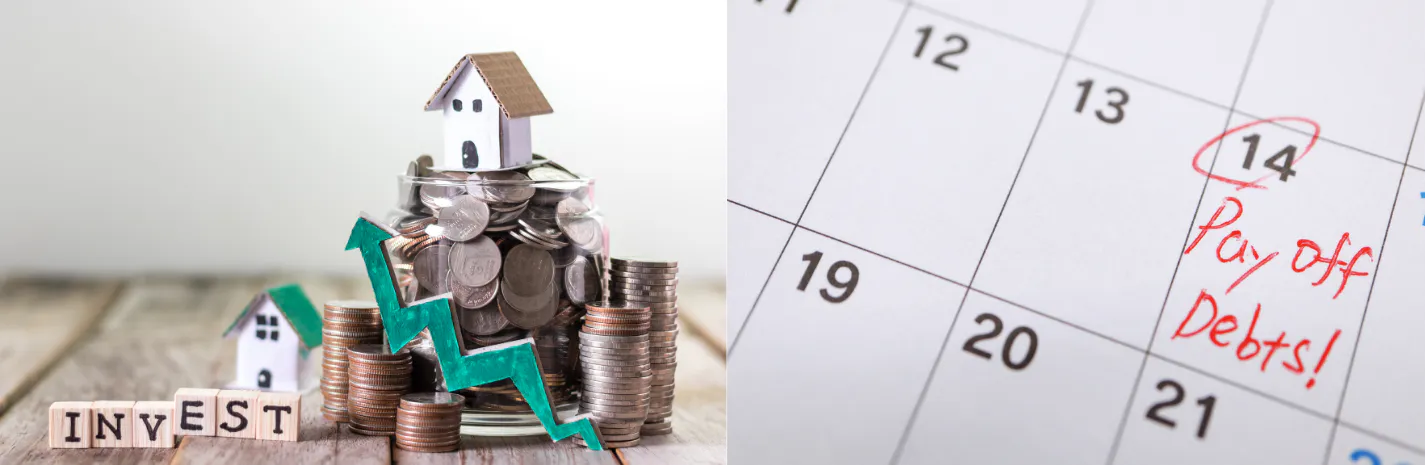
Why This Question Has No Single Answer
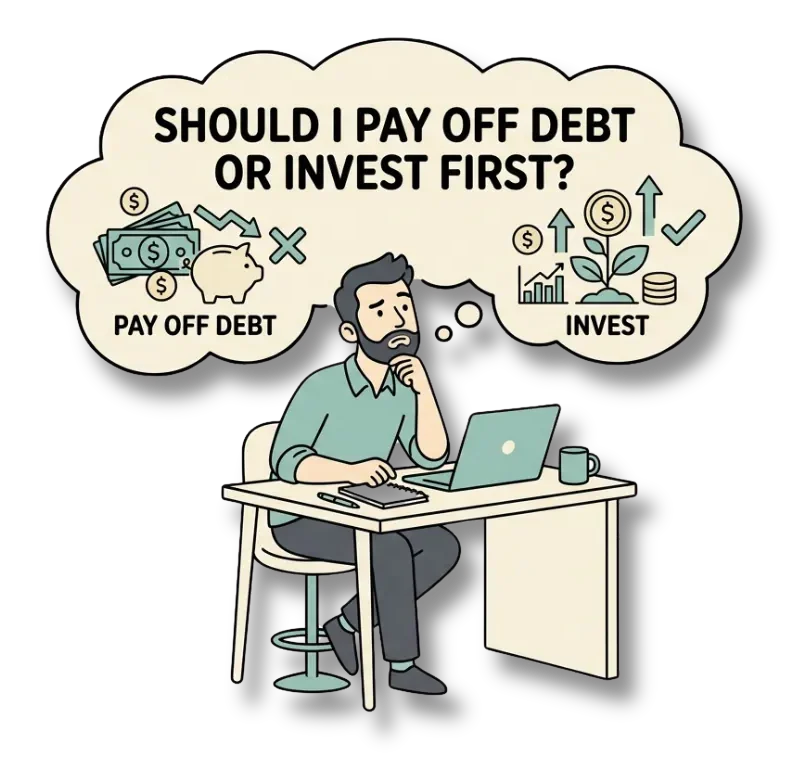
The answer depends on one thing: the interest rate on your debt.
Debt is not all the same. A credit card charging 24% is a completely different problem from a student loan at 4%. Treating them the same way is a mistake most people make without realizing it.
Here’s the framework. Your investments need to earn more than your debt costs you, in real terms, for investing to make sense over paying down debt. If your debt is costing you more than you can reasonably expect to earn, paying it off is the better return.
Think of paying off debt as a guaranteed return equal to the interest rate. Pay off a 20% credit card and you just earned a guaranteed 20% return. No index fund can promise you that.
The Simple Decision Rule
Use interest rate as your guide.
Above 7% — pay it off aggressively before investing. Credit cards, personal loans, payday loans. The guaranteed return on eliminating this debt beats any realistic investment return. Pay more than the minimum every single month. Minimum payments on high interest debt are designed to keep you in debt as long as possible. (What you could earn in an index ETF instead)
Below 4% — minimum payments are fine while you invest the difference. A 3% mortgage in a market that historically returns 10% means your money works harder invested than it does paying down the loan early.
Between 4% and 7% — the grey zone. A reasonable approach here is to split the difference. Put some extra toward the debt and some toward investing. Either decision is defensible. The important thing is you are doing both rather than paralyzed by the choice.
How to Do Both at the Same Time
A priority order that most financial planners broadly agree on:
- Build a small emergency fund in a high yield savings account first — $1,000 minimum so an unexpected expense doesn’t push you deeper into debt
- Claim your full 401(k) employer match — it’s a 50% to 100% instant return, nothing beats it
- Attack high interest debt hard — more than the minimum, as aggressively as your budget allows
- Fully fund your emergency fund to three to six months of expenses
- Invest in a Roth IRA or increase 401(k) contributions
- Pay down low interest debt at whatever pace feels comfortable
The minimum payment trap is real. On a $5,000 credit card at 24%, paying only the minimum means you’ll pay back close to double the original amount over many years. Always pay more than the minimum on high interest debt. Even an extra $50 a month makes a meaningful difference in how fast the balance falls.
The goal is to eliminate high interest debt completely, then redirect every dollar that was going to debt payments into investments (compound interest rewards this transition). That transition — from debt payoff to wealth building — is one of the biggest financial turning points most people will experience.