

What It Actually Means
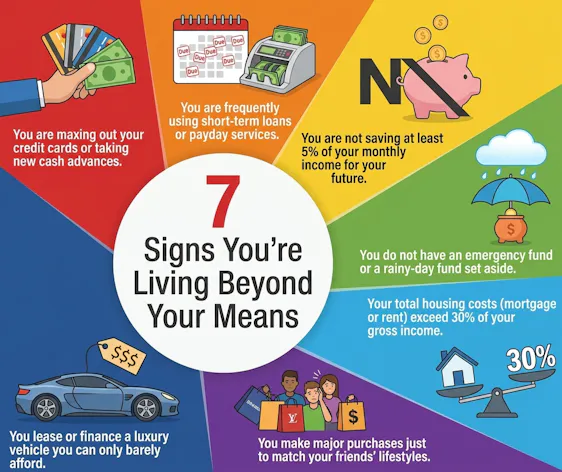
Living below your means does not mean being cheap.
It means spending less than you earn, intentionally, and doing something useful with the difference.
There is a big gap between the person who skips lattes to save $5 and the person who drives a modest car, rents a place they can genuinely afford, and invests $500 a month. Both are technically living below their means. One is building wealth. One is just uncomfortable.
The version worth pursuing is intentional, not miserable. I used to think living below my means meant never going out. It doesn’t. It meant driving my 2018 Civic while my colleagues financed BMWs. They looked wealthier. I was building a down payment.
Plenty of people earn good money and have nothing to show for it. A $120,000 salary disappears fast if your rent is $3,500, your car payment is $700, you eat out five nights a week, and you upgrade your phone every year. Income alone does not determine financial health. The gap between what comes in and what goes out does. Be wary of lifestyle creep.
That gap is the number that matters. Widen it and everything gets easier. Shrink it and no salary is ever quite enough.
What It Looks Like Day to Day
Three categories drive most of people’s spending. Everything else is noise.
Housing — the biggest one. Most financial guidelines suggest keeping rent or mortgage at 30% or less of your take home pay. If you’re above that, it is the hardest but highest impact thing to change. (HUD housing affordability guidance)
Transport — the second biggest. A new car with a $600 monthly payment plus insurance plus fuel is a serious drain. A reliable used car bought outright or with a small loan changes the math significantly.
Food — the most controllable. Eating out regularly is expensive. Not dramatically, meal by meal, but over a month the total surprises most people. Cooking most of your meals and eating out as a treat rather than a habit is one of the easiest ways to free up cash without feeling deprived.
Small daily decisions matter less than people think. Skipping coffee saves maybe $1,500 a year. Choosing a cheaper apartment saves that in a single month.
Focus on the big three first.
See also: Why purchasing power matters more than salary.
How to Start Without Overhauling Your Life
Start with one number.
Take your monthly take home pay. Subtract everything you spent last month. What’s left is your gap.
If it’s positive, you are living below your means. The question is whether that gap is big enough and what you’re doing with it.
If it’s zero or negative, you are living at or above your means. Something needs to change.
Pick one area. Not everything at once. Just one category where you can spend less without your life getting noticeably worse. Maybe it’s subscriptions you forgot about. Maybe it’s one fewer takeout per week. Maybe it’s refinancing a high interest loan.
Find the gap. Widen it by one thing. Then automate what you do with the difference — straight into a savings or investment account on payday, before you can spend it. Compound interest rewards consistency.
You don’t need a perfect budget. You need a gap and a plan for it.